
Proximity is only half the answer
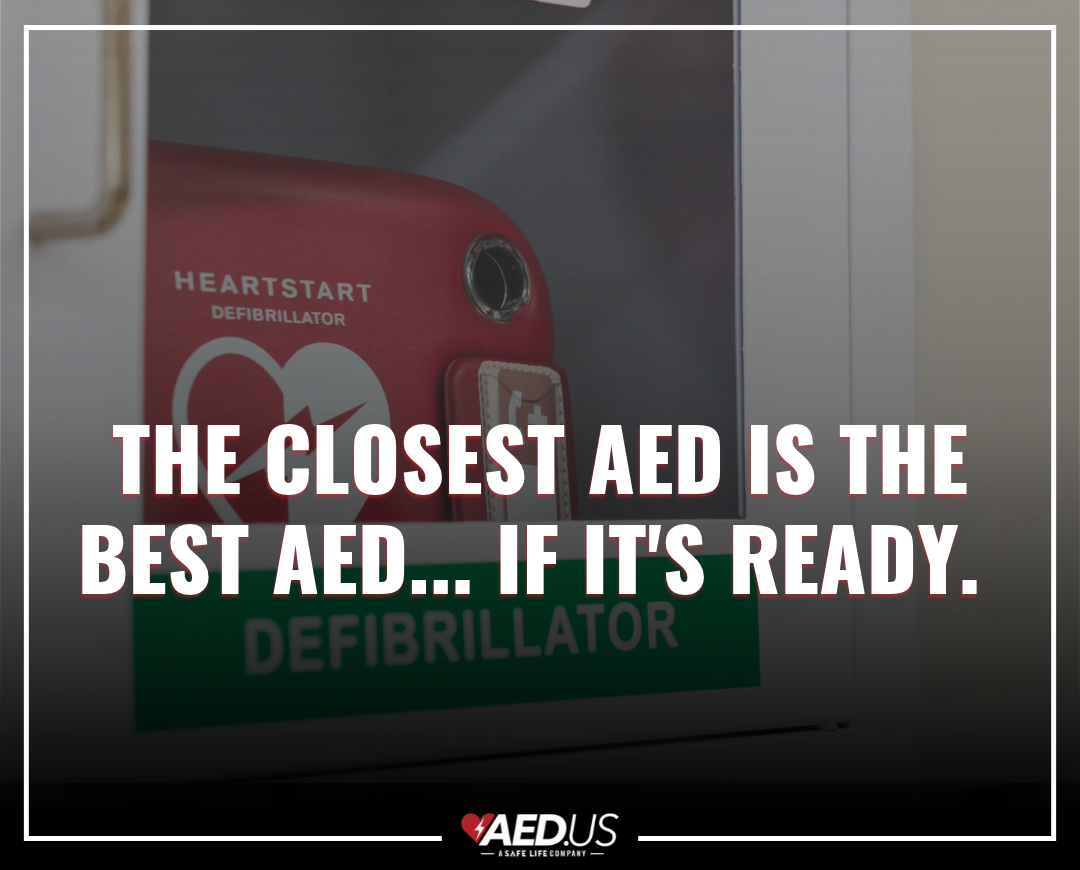
When someone goes into sudden cardiac arrest, the AED that matters is the one nearest to them. The newest model and the one with the most features don't matter if they're two floors away.
That's why most AED guidance focuses on placement: put devices where people are, keep them visible, shorten the walk. It's good advice. But proximity answers only one question: how far away is it? It says nothing about whether the device will work when someone opens the cabinet.
Six questions to ask about your AED program
-
Is every device FDA approved, still supported by its manufacturer, and clear of open recalls?
-
Can you confirm every AED is in its assigned location today?
-
When was each device last inspected, and where is that record?
-
Who owns the program, by name?
-
Do you know the expiration date of every set of pads and every battery?
-
How many people on each shift are trained in CPR and AED use, and when do their certifications expire?
If any answer is “I’m not sure,” the closest AED in your building may not be ready. The closest AED is only the best AED when these six things are true…
1. It's a device you can count on
Before you think about where an AED sits, confirm what it is. Three questions matter.
Is it from a reliable manufacturer with proven technology? Every AED sold in the US requires FDA premarket approval (PMA). Past that baseline, look for a manufacturer with a track record in the US market, published device specifications, and a distribution network that can support you for the life of the device.
Is it still actively supported? Manufacturers retire models. Once a model reaches end of life, replacement pads, batteries, software updates, and repair service eventually disappear. If you can't get supplies for a device, you can't keep it ready, no matter how close it is.
Is it under a recall? AEDs and their accessories get recalled for issues with batteries, pads, software, or internal components. Manufacturers send recall notices to the owner on record, which fails when that record lists someone who left three years ago. Check the FDA's medical device recall database, and make sure every device is registered to a current contact.
In a managed program, this is tracked for you. AED365 matches every device against manufacturer support status and recall notices, so a retired model or an open recall shows up on your list with a next step attached.
2. It's where it's supposed to be
AEDs move. They get borrowed for an event, carried to the gym for a game, relocated during a renovation, or set in a storage closet by someone who meant to bring it back. Your floor plan shows a device on the second floor. Is it there right now?
TAG by AED365 answers that question. It leverages GPS, cellular and additional tracking technologies, so you know every AED is where your response plan says it is, and you find out quickly when one isn't.

3. It's ready to use
A device in the right spot with a dead battery or expired pads is a box on a wall. Ready means:
-
Enough battery power to complete a rescue
-
Pads in date and sealed
-
Status indicator showing ready
-
Inspections done on a regular schedule and documented
4. Someone owns the program
This is where most programs break down. The device was bought, installed, and handed to whoever was around at the time. Two years later, that person has changed roles, the inspection log stops at month four, and no one is sure who's responsible.
That's “buy and forget,” and it's how most AED programs fail: slowly, in the years after the purchase.
A managed program fixes the ownership gap. AED365 puts every device at every location in one account, with inspection schedules, expiration dates, service history, and compliance records in the same place. A subscription turns upkeep into something that happens on schedule, not something your team has to remember. An AED subscription is another approach: you rent the AED instead of buying it, and upkeep happens on schedule as part of the plan, so it's never something your team has to remember.
5. Supplies get replaced before they expire
Pads and batteries expire, and pediatric pads do too. When one site has three devices and another has twelve, all bought at different times, the replacement calendar gets complicated fast.
So ask yourself: how are you handling supply replenishment today? If the answer is a spreadsheet, a calendar reminder, or “the vendor will call us,” you have a gap.
With AED365 program management, replacement supplies are tracked by device and replaced ahead of expiration. Your team doesn't reorder or chase anything, and you keep a record showing the work was done.

6. The people nearby know what to do
An AED doesn't respond to an emergency. People do. The first person to reach the device is usually a coworker, a teacher, a coach, or someone at the front desk. If they haven't been trained in CPR and AED use, the device's location matters much less.
CPR keeps blood flowing to the heart and brain until the AED is in place and ready to deliver a shock. That's why training should cover the people who are actually in your building on every shift, and why certifications need tracking just like pads and batteries, so they don't quietly expire.
Close and ready
Placement puts the AED close. The program keeps it ready. You need both.
Safe Life and AED365 bring device management, supply replenishment, location tracking, and CPR training into one managed program, so the closest AED in your building is also the best one.
Always Ready.
Written by Anthony Verdeja